Zygomatic Implants: Advanced Dental Solutions
Zygoma treatment by the specialist – ZAGA Center Frankfurt-Mainz
If there is hardly any jawbone left in the upper jaw and conventional implants no longer have enough hold, zygomatic implants (cheekbone implants, also called zygoma implants) can open up an option for fixed teeth, often without extensive bone grafting beforehand.
Dr. Daniel Kraus is one of the most experienced zygoma specialists in Germany. As a specialist in oral surgery, M.Sc. in Implantology and M.Sc. in Periodontology, he specializes in complex implant cases and the treatment of severely atrophied jaws.
The Dr. Kraus Implant Clinic is ZAGA Center Frankfurt-Mainz and one of the specialized centers for zygomatic implant surgery. Patients come to us from all over Germany and abroad when conventional implant treatment seems difficult or no longer possible because of the available bone.

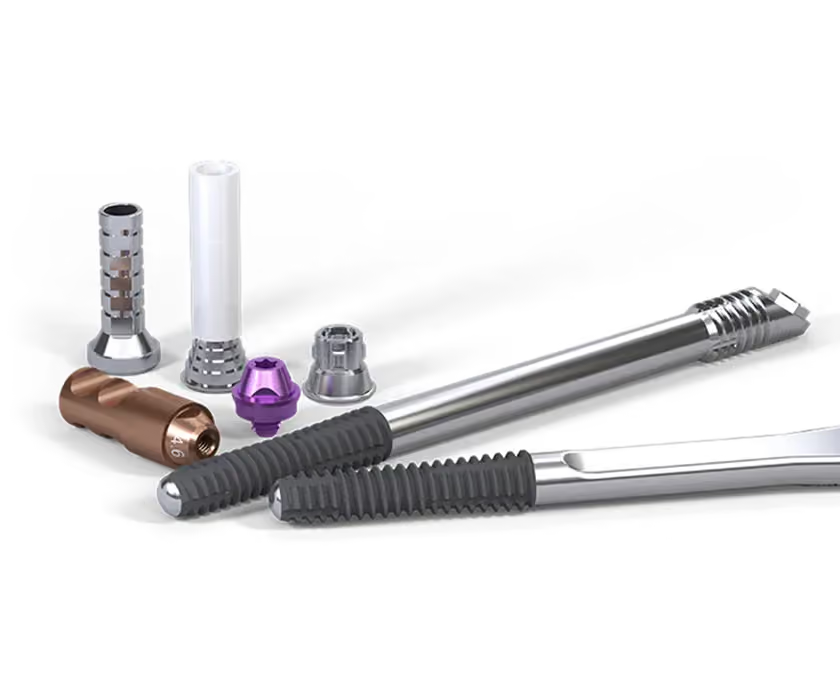
What are Zygomatic Implants?
Zygomatic implants, also known as zygomatic dental implants, are specialized long implants anchored in the zygomatic bone (cheekbone) rather than the maxilla. This procedure is particularly suited for patients with significant bone loss in the upper jaw who are not candidates for conventional implants. While traditional dental implants typically measure up to 18 mm in length, zygomatic implants can be as long as 55 mm.
They are ideal for patients with severe bone loss and do not – unlike traditional implants – require bone grafting. This is because the zygomatic bone experiences minimal bone loss after tooth extraction, providing a stable foundation for the implants even in patients with significant jaw atrophy.
Zygomatic teeth implants provide a reliable solution for severe bone loss, offering an alternative to extensive bone grafting procedures. They are commonly used together with the All-on-4 treatment concept, allowing for the immediate placement of a fixed prosthesis. This treatment can restore a full set of teeth in a single day, even for patients with minimal bone in the posterior maxilla.
Your benefits with zygomatic implants with Dr. Kraus
Highly specialized zygoma experience
Dr. Daniel Kraus specializes in complex implant cases with severe bone loss and regularly performs restorations with zygomatic and pterygoid implants.
ZAGA Center Frankfurt-Mainz
As a ZAGA Center, the Dr. Kraus Implant Clinic is part of an international network of specialized centers for treatment with zygomatic implants.
Clinic for complex procedures
As a clinic licensed under § 30 of the German Trade Regulation Act (GewO), we have two operating rooms, general anesthesia, 3D diagnostics and patient rooms for extensive zygoma treatments and for the care of patients who travel a long way.
In-house master dental lab
Our own master dental laboratory specializes in extensive implant-supported restorations and works directly with the surgeon on immediate restorations and the final prosthesis.
Who is suited for zygomatic implants?
who have a toothless or almost toothless upper jaw,
whose remaining teeth can no longer be preserved in the long term,
with severe bone loss in the upper jaw,
who have worn a removable denture for a long time and want fixed teeth,
for whom extensive bone grafting is not possible, not desired or has already failed,
or who need a particularly specialized implant treatment because of severe bone atrophy.
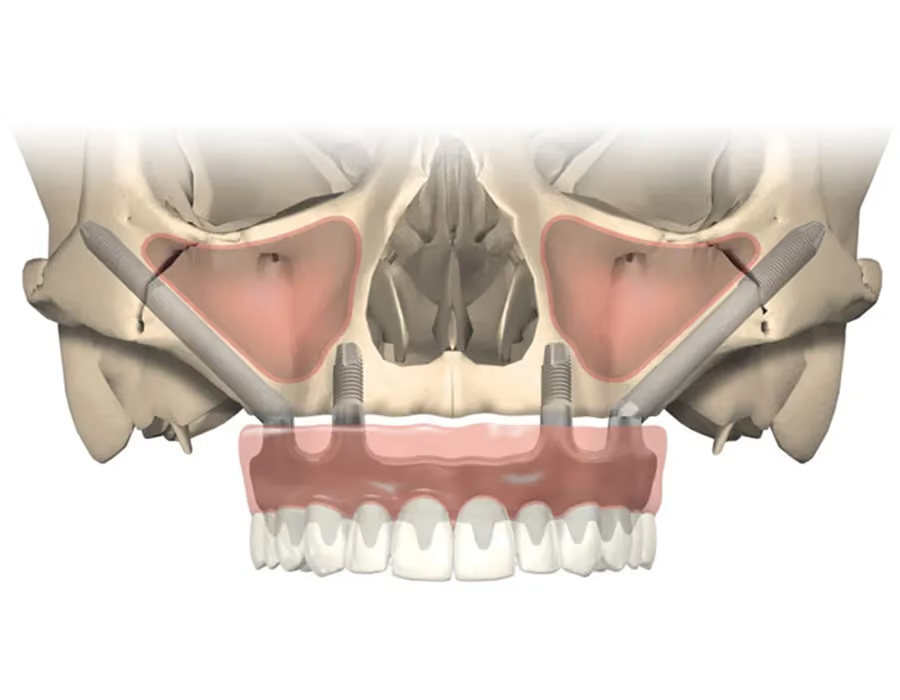
Hybrid Zygoma or Quad Zygoma?
How many zygomatic implants are needed depends on how much bone is still available:
Hybrid zygoma:
If there is still enough bone in the front part of the jaw, one zygomatic implant per side is usually sufficient, combined with conventional implants.Quad zygoma:
If the front part of the jaw is also severely affected by bone loss, two zygomatic implants can be anchored in the zygomatic bone on each side. This way, a fixed prosthesis finds sufficient hold even with very little bone.
Have You Been Told That Implants Are No Longer Possible?
“You don't have enough bone for implants.”
Many patients who come to us have already heard this sentence. With a severely receded upper jaw, classic implants are indeed often no longer sufficient.
However, that does not automatically mean that fixed teeth are no longer possible.
As a center specialized in complex implantology, we examine not only classic implants and bone grafting but also All-on-4®, pterygoid and zygomatic implants. The goal is not to turn to zygomatic implants as quickly as possible, but to find the treatment that fits your bone and your starting situation. Zygomatic implants in particular can open up options in cases of pronounced bone loss, when conventional implant concepts reach their limits.
Dr. Daniel Kraus specializes in exactly these difficult starting situations.
Dr. Daniel Kraus – Specialist for Zygomatic Implants and Complex Implant Cases
Zygomatic implantology is one of the most demanding areas of dental implantology. The experience and specialization of the surgeon are therefore of particular importance.
Dr. Daniel Kraus is a specialist in oral surgery, M.Sc. in Implantology and M.Sc. in Periodontology with more than 20 years of experience in implantology. He has placed more than 20,000 implants and treated several thousand jaws with All-on-4®.
A particular focus of his work is on patients with extremely reduced jawbone, for whom classic implant concepts reach their limits. Dr. Kraus regularly performs complex restorations with zygomatic and pterygoid implants.
With more than 300 zygoma restorations performed, Dr. Daniel Kraus is one of the highest-volume zygoma implantologists in Germany.
Zygoma treatment is part of our All-on-4® concept: here too, immediate restoration is possible where conditions are suitable. Patients come from all over Germany and abroad to the Dr. Kraus Implant Clinic in Mainz for these highly specialized treatments.
Initial consultation
Do you have questions about zygomatic implants or want to find out whether the treatment is right for you?
Patient Experiences with Zygomatic Implants
“It's great! I don't have any pain or pressure, I don't feel anything at all. You can eat and brush your teeth normally. That's quality of life! [...] For me, it's the best alternative there could have been. [...] Wonderful practice, super nice people, and the doctor is excellent, of course.” (Translated from German)
“Everything has gotten better, and I feel really comfortable; I'm very happy. My quality of life has drastically improved. [...] The initial consultation with Dr. Kraus convinced me of his approach. [...] He explained exactly what he planned to do and how the surgery would proceed! After the surgery, I had no pain! [...] I would definitely recommend Dr. Kraus.” (Translated from German)
Treatment Process for Zygomatic Implants
1
Step 1: Personal Consultation and Examination
At the beginning is a detailed examination by Dr. Daniel Kraus. He assesses your dental situation, your wishes and any previous treatments, and checks which options exist for a fixed restoration.
2
Step 2: 3D Diagnostics and Planning
With the help of three-dimensional imaging (CBCT or CT), the available bone and the anatomical structures are assessed precisely. On this basis, Dr. Kraus plans the position and number of the implants and the restoration concept that suits you.
3
Step 3: Preparation of Surgery and Prosthesis
Implant planning, anesthesia and the dental restoration are coordinated precisely. Our in-house master lab prepares the planned fixed prosthesis for the treatment in advance. Before the procedure, a consultation with the anesthesiologist checks your health, including blood tests and an ECG, to make sure you are fit for general anesthesia.
For particularly complex anatomical situations, we go one step further: based on the 3D diagnostics, a three-dimensional model of the skull can be made. On this model, Dr. Daniel Kraus can go through the planned procedure in advance and perform a trial operation, for example for quad zygoma treatments.
This allows anatomical features and the planned path of the implants to be assessed beforehand and the surgery to be prepared with particular care.
4
Step 4: Implantation
The zygomatic implants are placed in our clinic area and anchored in the stable zygomatic bone. Depending on the starting situation, they can be combined with classic implants or pterygoid implants. If you wish, or if medically indicated, the procedure can be performed under general anesthesia.
5
Step 5: Fixed Teeth on the Day of Treatment
Where conditions are suitable, the implants are fitted with a fixed healing prosthesis on the same day. It is individually adjusted in our own master lab and attached to the implants.
6
Step 6: Aftercare and Final Restoration
After the surgery, we closely accompany you through the healing phase, including follow-up appointments with professional cleaning and instructions for care at home. After healing and stabilization, usually after about 4 to 6 months, the final prosthesis is made and placed, individually adjusted to function, bite and aesthetics.
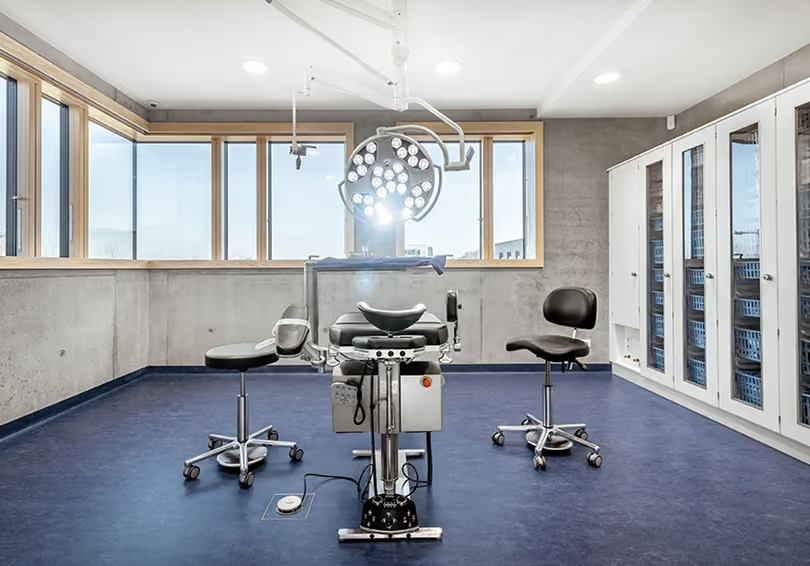
Implant Clinic for Complex Procedures – Even for Long-Distance Travel
Zygomatic implant surgery is one of the most demanding procedures in implantology, so we carry it out in a clinic built for it: licensed under § 30 of the German Trade Regulation Act (GewO), with two operating rooms, 3D diagnostics, general anesthesia and patient rooms where you can recover and stay overnight if needed. As ZAGA Center Frankfurt-Mainz, we are part of an international network of specialized zygoma centers, and our in-house master dental lab works directly with the surgeon on your fixed teeth.
Many of our zygoma patients travel to Mainz from other parts of Germany or from abroad, so we coordinate diagnostics, surgery, restoration and follow-up appointments as efficiently as possible.
ZAGA Center Frankfurt-Mainz
Die Dr. Kraus Implantatklinik ist als ZAGA Center Frankfurt-Mainz Teil eines internationalen Netzwerks spezialisierter Zentren für Zygoma-Implantologie.
Die ZAGA-Philosophie steht für eine individuell an die Anatomie des Patienten angepasste Planung und Durchführung von Zygoma-Behandlungen bei schwerem Knochenschwund im Oberkiefer. Für unsere Patienten verbindet sich dieser internationale Ansatz mit der besonderen Erfahrung von Dr. Daniel Kraus in der Behandlung stark atrophierter Oberkiefer und komplexer Implantatfälle.
Meisterlabor direkt im Haus
Bei einer Zygoma-Behandlung endet die Planung nicht mit dem Setzen der Implantate. Entscheidend ist die Versorgung mit funktionellem und ästhetisch hochwertigem festsitzendem Zahnersatz.
Unser zahntechnisches Meisterlabor befindet sich direkt in der Implantatklinik. Operateur und Zahntechniker arbeiten von der Planung bis zur Versorgung eng zusammen – besonders wichtig bei komplexen Sofortversorgungen ganzer Kiefer.

Fixed Teeth – Despite Severe Bone Loss
In suitable cases, zygomatic implants can be loaded immediately and fitted with a fixed healing prosthesis on the day of the operation.
This means that even patients with a severely receded upper jaw do not necessarily have to rely on a removable denture during the healing phase.
After the implantation, the previously planned dental restoration is adjusted in close cooperation with our master dental lab and attached to the implants.
With the right medical conditions, you therefore leave the implant clinic on the same day with fixed teeth. After the healing phase, the final restoration follows.
Implantation and fixed restoration
On one treatment day
No removable temporary denture
Master dental lab in-house
Häufige Fragen und Antworten
Für wen sind Zygoma-Implantate nicht geeignet?
Wie lange halten Zygoma-Implantate?
Was haben Zygoma-Implantate mit dem All-on-4 Konzept zu tun?
Wie viele Zygoma-Implantate können gesetzt werden?
Fühlen sich Zygoma Implantate anders als normale Implantate an?
Verläuft die prothetische Versorgung mit Zygoma anders?
Was kosten Zygoma-Implantate?
Sind Zygoma-Implantate sicher?
Welche Risiken gibt es bei Zygoma-Implantaten?
Kann ich Zygoma-Implantate auch im Unterkiefer setzen?
Welche Erfahrung gibt es mit Zygoma-Implantaten?
Wie finde ich den passenden Arzt für Zygoma-Implantate?
So pflegen Sie Ihre Zygoma-Implantate
Welche Alternativen gibt es zu Zygoma-Implantaten?
Kann ich Implantate im Oberkiefer auch ohne Knochenaufbau bekommen?
Was sind Implantate im Jochbein?